ALATA AESTHETICS

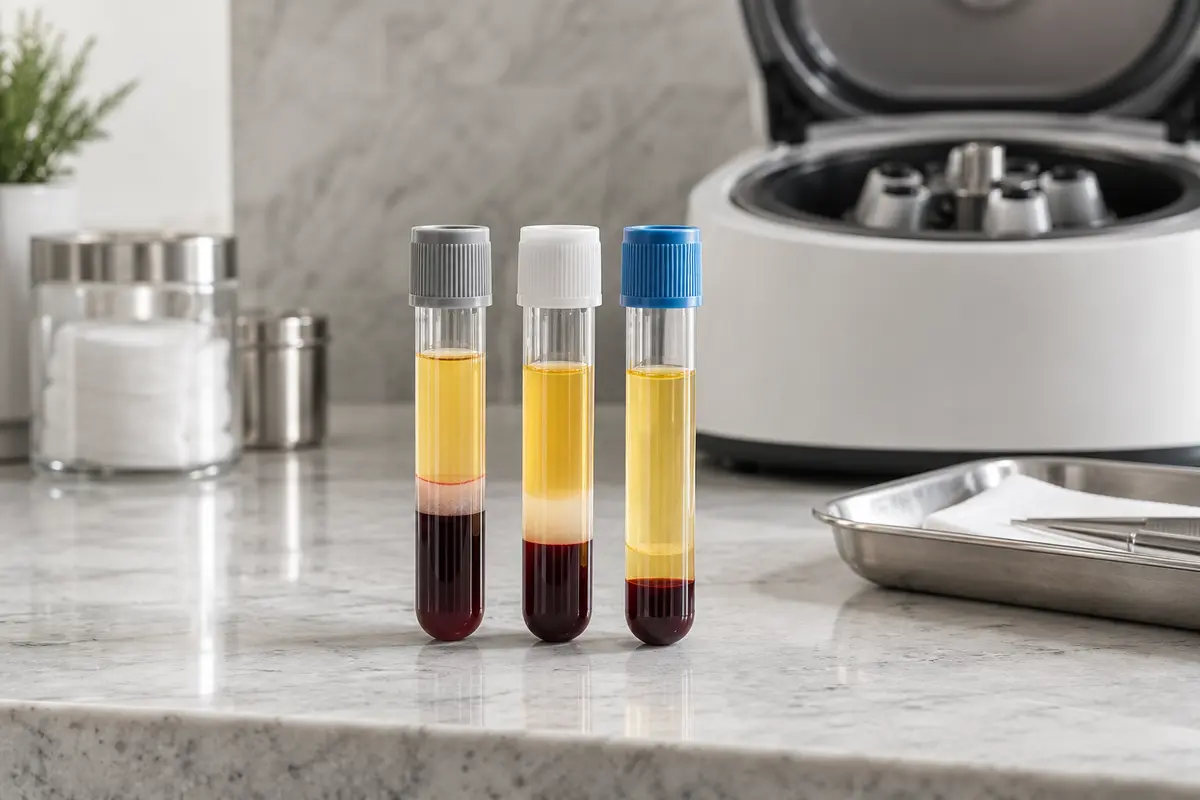
PRP and PRF and bio filler are autologous treatments, meaning the starting material is collected from your own blood. Although the names are sometimes used loosely online, they are prepared differently and are not identical treatments.
Platelet-rich plasma (PRP)
PRP preparation uses centrifugation to separate and concentrate a plasma fraction containing platelets. Depending on the clinical plan, it may be considered as an injectable treatment or used alongside an appropriate skin procedure.
Platelet-rich fibrin (PRF)
PRF refers to a platelet and fibrin preparation produced using a different protocol. The final characteristics depend on factors such as the collection system, centrifugation parameters, timing and handling.
Bio filler
Bio filler uses an autologous plasma preparation processed to create a more gel-like consistency. It may be considered for selected clients seeking subtle support of skin quality or volume. It should not be assumed to behave exactly like a conventional dermal filler.
Why preparation matters
Collection tubes or devices, processing protocol, sterility, timing and practitioner technique all influence the final preparation. At Alata Aesthetics, bio filler is prepared using the Alocuro centrifuge and an appropriate closed collection system.
What should be discussed?
A consultation should cover your medical history, medications, blood or platelet conditions, treatment goals, alternatives, discomfort, bruising or swelling, recovery and the limits of expected results. Suitability and outcomes vary, and a course may be recommended in some circumstances.
Using your own blood does not mean a treatment is risk-free. Appropriate clinical assessment, infection control and informed consent remain essential.
This article provides general information only and does not replace medical advice. Treatment suitability, recovery and outcomes vary. A consultation with an appropriately qualified health professional is required before treatment.